
Agropulse, a farm management platform with a digital field logbook, connected sensors and iOS and Android apps
ClientAgropulse | Year 2024
ServicesDesign and development | iOS and Android apps | API development | Custom web application
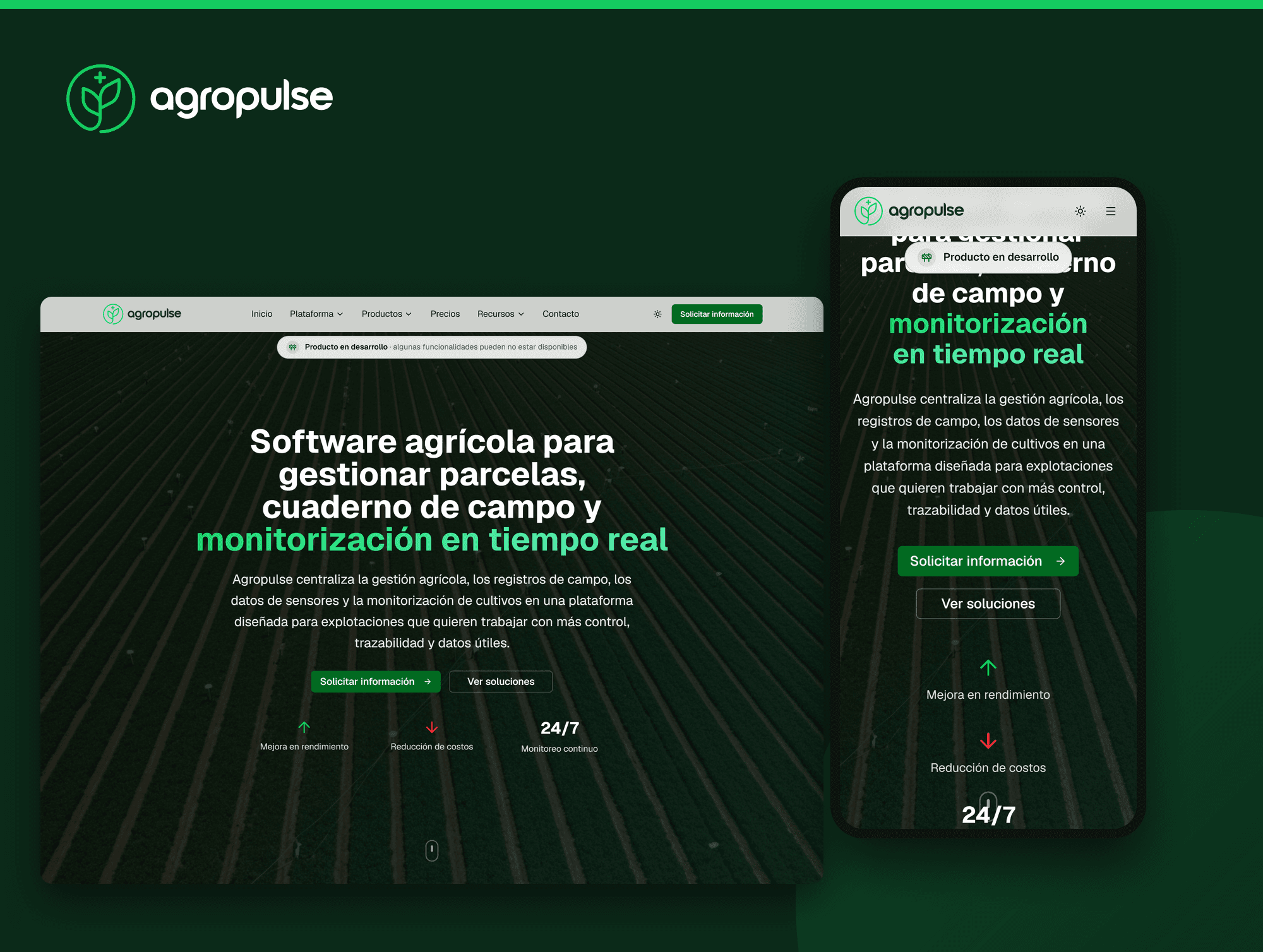
Agropulse is a farm management platform that brings the field logbook, plots, irrigation, fertilisation and sensors together in one place, with official reports and mobile apps for working out in the field.
Where we started
The field logbook stopped being optional, but it was still being filled in on notepads, spreadsheets and phone photos. The data existed; it was scattered across five places, and nobody could get a decision or an official report out of it without typing everything again.
Agropulse exists to pull that work into a single platform: plots, holdings, treatments, irrigation, fertilisation, staff and machinery, along with readings from the sensors already out in the field.
KOMIT's solution
- A custom web application with a digital field logbook, plot and holding management, cost per plot, document management and export.
- Continuous monitoring: soil stations and pH/EC meters publish their readings into the platform, attached to the plot they belong to.
- Official PDF reports and SIEX/CUE integration, so the declaration comes out of the same data people work with every day.
- iOS and Android apps published from the same codebase as the web application, with Bluetooth sensor reading and code scanning to identify equipment in the field.
- Subscription plans, organisations with several users and roles, and push notifications for advisors and co-operatives running more than one holding.
How we built it
- The application was designed for the phone first: it gets used standing up, with gloves on, in full sun and with poor coverage. Anything that does not work on that screen does not ship.
- The native iOS and Android apps are packaged from the same application, so an improvement reaches the web and both phones at once instead of running three parallel builds.
- Sensors talk to the backend over MQTT, and it is the backend that normalises the reading, attaches it to the plot and decides when it is worth an alert.
- Alongside the platform we built the product site and the hardware shop, so the whole cycle — discover, subscribe, buy the sensor, use it — happens in one place.